Sora 2 API demand is still high because developers are trying to answer a practical question: can a video generation workflow safely route production traffic through OpenAI's Sora models now?
The short answer is risk-aware. As of June 12, 2026, OpenAI's video generation guide still documents the Videos API and sora-2/sora-2-pro examples. But OpenAI's deprecations page says the Videos API, sora-2, sora-2-pro, and related Sora 2 snapshots were deprecated on March 24, 2026 and are scheduled for removal from the API on September 24, 2026. OpenAI's deprecation table lists no recommended replacement for those rows.
That changes the search intent. A generic Sora 2 API access guide can send teams in the wrong direction. The useful job now is to verify official status, understand the remaining video API mechanics, and decide whether to hold, migrate, or route through a model catalog with explicit publish-day checks.
Quick Answer: Should You Build On The Sora 2 API Now?
| Check | Publish-Day Evidence | Routing Decision |
|---|---|---|
| Official lifecycle | OpenAI lists the Videos API and Sora 2 model aliases/snapshots with a September 24, 2026 shutdown date. | Do not treat the Sora 2 API as a durable new platform dependency without an explicit short-lived exception. |
| Replacement path | The OpenAI deprecations table shows --- in the recommended replacement column for Videos API and Sora 2 rows. |
Plan a model-catalog or provider-level alternative instead of assuming an automatic OpenAI migration target. |
| Pricing | OpenAI pricing still lists per-second Sora 2 rates, including sora-2 at 720p and sora-2-pro at multiple resolutions. |
Use pricing only for remaining short-term cost estimates. Price visibility is not the same as long-term availability. |
| Job lifecycle | OpenAI's video guide describes async video creation, status polling, and longer render times for higher-resolution jobs. | Any video route needs durable job IDs, polling, retry limits, usage logs, and cost review before user-facing release. |
| Flatkey verification | Flatkey public copy verifies one API key, https://router.flatkey.ai/v1, unified billing, routing dashboard, Seedance 2.0, and GPT Image. A June 12 pricing snapshot also showed sora-2 rows with unknown_failure availability. |
Do not claim Flatkey production support for the Sora 2 API until catalog status, account access, and a real test call are confirmed. |
If you only need to learn the API shape, the OpenAI guide is still useful. If you are choosing where to put roadmap or production traffic, the deprecation page should be the controlling source.
Why This Sora 2 API Topic Needs A Deprecation Watch
Fresh Ahrefs research for this task still shows strong demand: Sora 2 API has US search volume 1300, KD 28, CPC 140, and traffic potential 1200. Related searches include openai sora 2 api pricing, sora 2 api costs, sora 2 openai api docs, and ai video generation api.
The SERP also explains why the content needs to be current. The top result for the primary query is OpenAI's own video generation guide, followed by OpenAI model/docs pages and developer/community discussions. There were no DR < 60 front-page opportunities in the fresh pull, so the angle is not weak competition. The angle is precision: developers need a publish-day checklist that reconciles live docs, deprecation policy, pricing, and routing operations.
The scarcity is simple: most Sora 2 API content explains access or pricing. This article focuses on whether the route should be opened, held, or migrated before September 24, 2026.
Official Timeline To Put In Your Review
| Date | What To Record | Why It Matters |
|---|---|---|
| March 24, 2026 | OpenAI says developers were notified that the Videos API and Sora 2 model aliases/snapshots were deprecated. | The deprecation clock had already started before this article was drafted. |
| June 12, 2026 | Draft-day check: the video generation guide still documents Sora 2 workflows, while the deprecations page still lists the shutdown. | Teams must read product docs and deprecation docs together. |
| September 24, 2026 | OpenAI lists shutdown for the Videos API, sora-2, sora-2-pro, and related snapshots. |
Any production dependency needs a migration, disablement, or exception plan before this date. |
Use exact dates in internal tickets. "Soon" is too vague for video workloads because media jobs often involve user commitments, storage, review queues, and paid generation attempts.
Video API Lifecycle Checks Before You Route Traffic
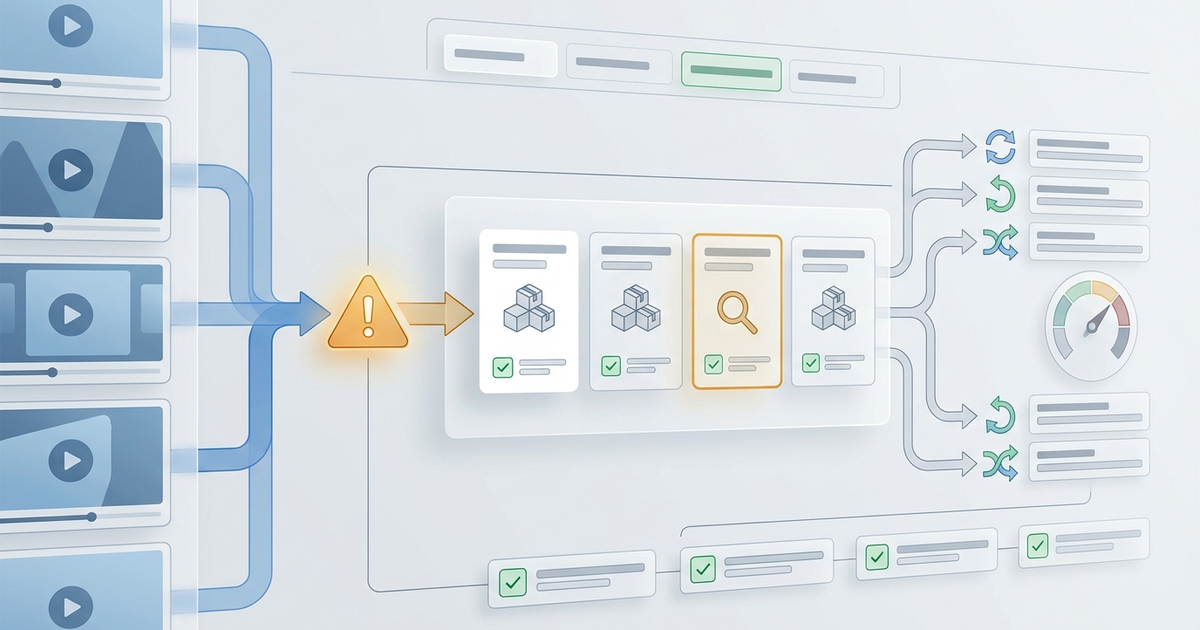
The OpenAI video guide shows the Sora 2 API as an asynchronous media workflow. A request can create a video job, the job can sit in queued or in_progress, and clients poll until completion. The guide also warns that a single render can take several minutes depending on model, load, and resolution.
That means video routing needs more control than a simple chat completion route. Use this checklist before a gateway, app, or automation sends real user traffic to any video model:
| Control | What To Verify | Failure Mode If You Skip It |
|---|---|---|
| Model ID | The exact model name, snapshot, and provider route your app sends. | A deprecated alias can keep working in tests and then fail at shutdown. |
| Endpoint shape | Whether your client is calling the official Videos API, a provider-specific video endpoint, or a gateway-normalized path. | SDK-compatible chat routes may not cover video job creation, polling, or download. |
| Job lifecycle | Job ID storage, polling cadence, timeout behavior, terminal states, and user-visible status messages. | Users may pay for jobs that your app loses, retries blindly, or cannot explain. |
| Duration and resolution | Requested seconds, size, orientation, and whether higher-resolution exports are required. | Per-second prices and render latency can change materially between preview and final output. |
| Retries | Retry limits, idempotency strategy, and whether a retry creates a second paid generation. | Retry storms turn model instability into hidden media spend. |
| Usage logs | Prompt hash, route, model ID, seconds, size, status, cost, upstream error, and final asset ID. | Finance and support teams cannot reconcile user complaints with provider invoices. |
| Catalog status | Whether the model is active, deprecated, temporarily failing, account-gated, or officially unsupported. | A model name in a catalog can be mistaken for production support. |
These controls apply even if you do not use the Sora 2 API. They are the minimum operating layer for any AI video generation API with asynchronous media jobs.
Sora 2 API Pricing Is A Short-Term Planning Input
OpenAI's pricing page listed direct Sora pricing on June 12, 2026. The visible standard rows were:
| Model | Resolution Row | Portrait | Landscape | Price Per Second |
|---|---|---|---|---|
sora-2 |
720p | 720x1280 | 1280x720 | $0.10 |
sora-2-pro |
720p | 720x1280 | 1280x720 | $0.30 |
sora-2-pro |
1024p | 1024x1792 | 1792x1024 | $0.50 |
sora-2-pro |
1080p | 1080x1920 | 1920x1080 | $0.70 |
Budgeting from those rates is still useful for a remaining approved experiment or migration window. It is not enough to justify a new long-term dependency. A deprecation-aware Sora 2 API budget should include three extra columns: shutdown risk, migration cost, and fallback-model test cost.
Flatkey Routing Notes: What Is Verified And What Is Not
Flatkey's public site says teams can use one API key, one dashboard, clear pricing, unified billing, and https://router.flatkey.ai/v1 for OpenAI-compatible clients. The current public copy names Claude, GPT, Gemini, DeepSeek, Qwen, Seedance 2.0, GPT Image, and more. Those are safe product claims for this article.
For the Sora 2 API, be stricter. A June 12, 2026 Flatkey pricing API snapshot returned 656 model rows and included sora-2 and sora-2-pro rows, but both rows were marked availability_status: unknown_failure. That is a catalog investigation signal, not a public support promise.
Before you route video generation through any gateway, open Flatkey pricing, check the exact model row, confirm the endpoint family, run a small test job with a real key, and verify that the dashboard records model ID, status, and cost. If the model status is unknown, temporarily failing, or unsupported, do not ship it behind a user-facing button.
What To Use Instead Of Treating Sora 2 As Evergreen
OpenAI's Sora deprecation table does not name a replacement. That does not mean every video feature must stop. It means each workflow needs a specific route decision.
| Workflow | Decision Pattern | Flatkey Cluster Link |
|---|---|---|
| You require OpenAI Sora output specifically | Hold new production commitments unless OpenAI or your account team confirms the post-shutdown plan. | View Pricing only after official status is rechecked. |
| You need text-to-video or image-to-video generation, but not Sora specifically | Evaluate active video rows, job lifecycle support, and cost logs. Seedance may be part of the review set if it fits your workflow. | Seedance API access |
| You need storyboards, frames, thumbnails, or image assets | Separate image generation from video generation so cheaper image workflows do not inherit video-route risk. | AI model pricing comparison |
| You need multi-provider operations | Route by endpoint family, model status, cost unit, and logs instead of hard-coding one provider's soon-to-shutdown alias. | LLM API gateway architecture |
The core decision is not "Sora or no Sora." It is whether your app can prove the current model status, price unit, job lifecycle, and fallback behavior on the day traffic moves.
Pre-September 24 Sora 2 API Checklist
- Read OpenAI's deprecations page on the day you make the decision.
- Record the exact date: September 24, 2026 is the listed shutdown date for Videos API and Sora 2 rows.
- Confirm whether your current code uses
sora-2,sora-2-pro, a dated snapshot, or a gateway alias. - List every feature, queue, automation, and customer workflow that can create a video job.
- Pull the last 30 days of video job logs: model ID, seconds, size, status, cost, retries, and failures.
- Estimate the cost to finish existing committed jobs before shutdown.
- Choose whether to disable new Sora 2 API traffic, migrate to an active video route, or keep only an internal experiment.
- Run the alternative model through the same async lifecycle test before sending user traffic.
- Update support copy, pricing copy, and internal runbooks so nobody promises Sora availability after the shutdown date.
- Use Flatkey pricing and dashboard logs to compare expected and actual routed spend before scaling.
FAQ
Is the Sora 2 API deprecated?
Yes. OpenAI's deprecations page says the Videos API and Sora 2 model aliases/snapshots were deprecated, with removal from the API scheduled for September 24, 2026. Recheck the official page before publishing or deploying because this is a lifecycle-sensitive topic.
Can I still use Sora 2 API pricing for budget estimates?
You can use the OpenAI pricing page as a publish-day direct-provider snapshot, but only for short-term planning. The visible rates are per second by model and resolution, and the deprecation date should be part of the budget decision.
What replaces the Sora 2 API?
OpenAI's deprecations table lists no recommended replacement for Videos API, sora-2, or sora-2-pro. Teams should evaluate active video-generation routes, verify model catalog status, and test alternatives before migration.
Does Flatkey support the Sora 2 API?
Do not assume production support from a catalog name alone. Flatkey public copy verifies one API key, routing, unified billing, Seedance 2.0, and GPT Image. The June 12 pricing snapshot showed Sora rows with unknown_failure availability, so production Sora support needs direct confirmation and a real test.
What should a video gateway log?
Log model ID, endpoint family, route, job ID, prompt hash, seconds, size, status, retries, upstream error, cost, and final asset ID. Those fields make Sora 2 API migration decisions auditable instead of anecdotal.
The safest Sora 2 API plan is a dated operating decision: check OpenAI's deprecation page, treat September 24, 2026 as a hard planning date, verify every gateway catalog row, and move new video workloads only after the model status, cost unit, and async lifecycle are proven.
View Pricing to inspect current Flatkey video and image model rows before you route a production media workflow.