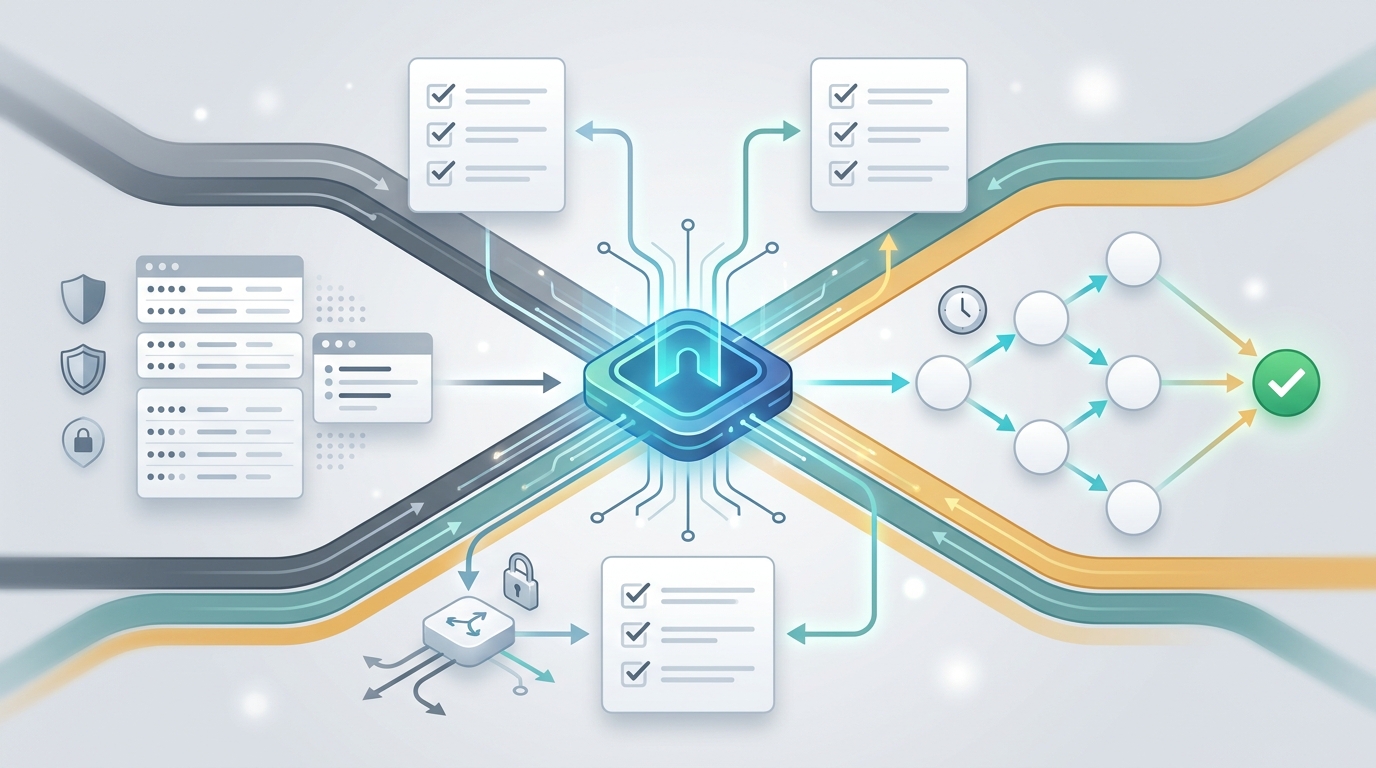
If you are comparing OpenRouter alternatives, you are probably not just asking, "Which service has a long model list?" You are deciding how your product will access models, route failures, track usage, control spend, and keep SDK changes small as your model stack grows.
OpenRouter is useful when a developer wants one API surface for many models. The harder question is what happens after the prototype: who owns provider accounts, billing, quotas, routing logic, failover, logs, and cost review? That is where OpenRouter alternatives start to look very different from one another.
This guide compares the most practical OpenRouter alternatives in 2026: managed AI gateways, self-hosted proxies, direct provider accounts, cloud ecosystem gateways, and model-specific inference platforms. It also explains where Flatkey fits: one API key, an OpenAI-compatible base URL, unified billing, usage visibility, and routing across named model families such as Claude, GPT, Gemini, DeepSeek, Qwen, Seedance 2.0, and GPT Image.
Quick Answer: The Best OpenRouter Alternative Depends On What You Want To Own
The best OpenRouter alternatives are not interchangeable. Choose based on the operational layer you want your team to own.
| If Your Priority Is... | Start With | Why |
|---|---|---|
| Managed one-key access with unified billing and an OpenAI-compatible base URL | Flatkey | Good fit when you want a managed gateway, one dashboard, and low migration friction. |
| Huge model browsing and experimentation | OpenRouter | Good fit when catalog exploration is more important than replacing gateway operations. |
| Self-hosted routing and full policy control | LiteLLM | Good fit when your team wants to run and maintain the proxy itself. |
| Gateway inside an existing deployment platform | Vercel AI Gateway or Cloudflare AI Gateway | Good fit when your app already lives in that ecosystem and you want native budgets, monitoring, or fallback controls. |
| Direct official provider relationships | OpenAI, Anthropic, Google, DeepSeek, and other provider accounts | Good fit when procurement, pricing, support, or data handling requires direct contracts. |
| Media-heavy model jobs | Replicate, fal.ai, or similar inference platforms | Good fit when the workload is image/video/job-shaped rather than mostly chat completions. |
If you want a managed OpenRouter alternatives AI gateway for product teams, Flatkey is the option to evaluate first. If you want open-source infrastructure ownership, start with LiteLLM. If you want free experimentation, look at free tiers carefully, but do not confuse "free test calls" with production readiness.
What OpenRouter Does Well
Before comparing OpenRouter alternatives, give OpenRouter its due. OpenRouter's documentation positions it as a unified API for access to hundreds of AI models through a single endpoint, with OpenAI SDK compatibility and a base URL pattern that can fit existing OpenAI-style client code.
That matters. Developers like OpenAI-compatible APIs because they can often change a base URL, model name, and API key without rewriting the entire client. For early experimentation, a broad catalog and one request shape reduce friction.
But the reason people search for OpenRouter alternatives is usually not because "one API" stopped being useful. It is because the team hit one of these questions:
- Can we make billing clearer for finance and product owners?
- Can we reduce provider-account sprawl?
- Can we control quota and usage per team?
- Can we route around upstream failures without building a router ourselves?
- Can we keep our existing SDK while moving to a different managed gateway?
- Can we choose a cheaper or more predictable model access layer?
- Can we avoid operating a self-hosted proxy?
Those are operational questions, not just catalog questions.
The Practical Comparison Matrix
Use this matrix to shortlist OpenRouter alternatives before you run a proof of concept.
| Option | Best Fit | Strengths | Watchouts | Migration Notes |
|---|---|---|---|---|
| Flatkey | Teams that want managed multi-model access with one key, one dashboard, unified billing, and OpenAI-compatible migration | One API key, OpenAI-compatible base URL, usage and billing visibility, routing across named model families | Review current model availability and pricing before publish or production use | Change base URL to https://router.flatkey.ai/v1, use a Flatkey key, verify model IDs and usage logs. |
| OpenRouter | Broad model exploration and fast switching across many models | Large catalog, OpenAI SDK compatibility, quick prototyping | Billing, routing behavior, model availability, and production controls still need team review | Useful baseline if your team already uses OpenRouter and wants to compare operational gaps. |
| LiteLLM | Teams that want to self-host an OpenAI-format gateway | Open-source, OpenAI-format interface, proxy server, retries/fallbacks, virtual keys, spend tracking | You own deployment, uptime, upgrades, security, observability, and incident response | Good if platform engineering wants control and has capacity to run the gateway. |
| Vercel AI Gateway | Teams already building with Vercel and AI SDK workflows | Unified endpoint, budgets, usage monitoring, fallbacks, load balancing | Best fit is often strongest inside the Vercel ecosystem | Evaluate if your app is already on Vercel and you want native workflow fit. |
| Cloudflare AI Gateway | Teams that want gateway controls near Cloudflare infrastructure | Analytics, logging, caching, rate limiting, retries, model fallback | Ecosystem fit matters; model/provider coverage and request shape need validation | Evaluate if your stack already uses Cloudflare and wants traffic/control-plane integration. |
| Direct provider accounts | Teams that need official contracts, direct support, or provider-specific capabilities | Clear official relationship, native APIs, direct terms | Multiple keys, bills, quotas, SDK differences, and routing logic | Best when procurement requires direct vendor relationships. |
| Replicate/fal.ai/media inference platforms | Teams with media-heavy or job-shaped workloads | Strong fit for image, video, audio, or model execution jobs | Chat gateway replacement may be incomplete; pricing can vary by runtime/job shape | Use for specific workloads, not automatically as a full OpenRouter replacement. |
When Flatkey Is The Right OpenRouter Alternative
Flatkey is the right OpenRouter alternative when your team wants a managed gateway instead of another infrastructure project.
The core Flatkey pattern is simple:
- Get one Flatkey API key.
- Point your existing OpenAI-compatible client at
https://router.flatkey.ai/v1. - Choose the model route you want to call.
- Review usage, billing, and routing from one dashboard.
That is useful when a product already uses OpenAI-style SDKs but now needs access to multiple model families. Flatkey's public product copy emphasizes one key, clear pricing, unified billing, a usage dashboard, and routing across providers such as Claude, GPT, Gemini, DeepSeek, Qwen, Seedance 2.0, and GPT Image.
The important distinction is operational. Some OpenRouter alternatives optimize for broad discovery. Some optimize for self-hosted control. Flatkey optimizes for a managed, one-key setup with billing and usage visibility included in the workflow.
Choose Flatkey when:
- You want a managed AI API gateway, not a self-hosted proxy.
- You want one billing surface instead of separate provider invoices.
- You want to keep an OpenAI-compatible base URL migration path.
- You need model access across text, image, and video families.
- You want usage review and quota habits before production traffic grows.
- You do not want your application team to maintain routing infrastructure.
Flatkey is not the right answer for every search. If your legal or procurement policy requires direct provider contracts, direct accounts may be better. If your team wants to control every routing rule in your own infrastructure, LiteLLM may be a better starting point. But for teams searching for OpenRouter alternatives because they want less account sprawl and better billing visibility, Flatkey deserves the first evaluation slot.
When LiteLLM Is The Right OpenRouter Alternative
LiteLLM is the OpenRouter alternative to evaluate when self-hosting is a feature, not a burden.
LiteLLM's docs position it as an open-source library and proxy that gives teams a unified interface across many LLM providers using the OpenAI format. Its proxy path includes concepts like virtual keys, cost tracking, retries, fallbacks, and an admin UI.
That is attractive for platform teams that want to own the gateway layer. You can put the proxy inside your own infrastructure, design your own policies, and connect it to your internal observability and compliance tooling.
The tradeoff is ownership. With LiteLLM, your team is responsible for deployment, scaling, upgrades, provider drift, secrets, incident response, and support. That may be exactly what an infrastructure-heavy team wants. It may be too much for a product team that simply wants a managed access layer.
Choose LiteLLM when:
- You need self-hosting or internal network control.
- You have platform engineering capacity.
- You want to build custom routing and policy logic.
- You accept the operational cost of maintaining the gateway.
Choose a managed option like Flatkey when the gateway should reduce operations work instead of creating a new service to run.
When Vercel Or Cloudflare Gateways Make Sense
Vercel AI Gateway and Cloudflare AI Gateway are serious OpenRouter alternatives when your app already lives close to those ecosystems.
Vercel's AI Gateway documentation describes a unified API for hundreds of models through a single endpoint, with budgets, usage monitoring, load balancing, and fallbacks. Cloudflare's AI Gateway documentation emphasizes analytics, logging, caching, rate limiting, retries, and model fallback.
Those are real gateway features. The decision is ecosystem fit. If your deployment, observability, and team workflow already sit in Vercel or Cloudflare, their gateways may reduce integration overhead. If your team wants a provider-neutral gateway centered on one key, model access, billing visibility, and OpenAI-compatible migration, Flatkey may be the cleaner evaluation path.
When Direct Provider Accounts Are Still Better
Some teams should not start with OpenRouter alternatives at all. They should start with direct provider accounts.
Direct accounts can be better when:
- Procurement requires a direct contract with OpenAI, Anthropic, Google, or another provider.
- You need provider-specific support terms.
- You depend on native API features that a gateway may not expose yet.
- You need strict data-processing terms from the upstream provider.
- You have a small model surface and do not mind managing separate keys and invoices.
The downside is sprawl. As soon as you use five providers, you own five keys, five billing surfaces, five quota systems, five SDK quirks, and your own failover logic. That is the moment an AI API gateway becomes more attractive.
Cost: Do Not Compare Only Token Prices
Many searches for OpenRouter alternatives are really searches for OpenRouter cheaper alternatives. Cost matters, but token price is only one part of production cost.
Compare cost across four layers:
| Cost Layer | What To Measure | Why It Matters |
|---|---|---|
| Unit price | Token, image, video, or compute pricing | Baseline cost per request. |
| Retry waste | Failed calls, repeated calls, fallback attempts | A cheap unit price can become expensive if failure handling is poor. |
| Engineering time | Gateway setup, maintenance, monitoring, upgrades | Self-hosting can save vendor margin but add labor cost. |
| Billing operations | Invoices, budgets, quota reviews, team usage reporting | Finance and product teams need visibility, not just raw API access. |
For best cheap OpenRouter alternatives 2026 searches, the practical answer is: run a workload test. Take a real prompt or job batch, route it through your shortlist, and compare cost per successful outcome, not cost per listed token.
Flatkey's advantage is that cost review happens inside a unified billing and usage workflow. LiteLLM's advantage is that you can design your own economics if you are willing to run the infrastructure. Direct provider accounts may have the best official pricing for a narrow use case but often lose simplicity when the model stack grows.
Free-Tier Searches Need A Production Reality Check
Searches like OpenRouter free tier alternatives 2026, OpenRouter free models alternatives, and free LLM API alternatives to OpenRouter 2026 usually come from experimentation-stage developers. That intent is valid, but production teams should separate free exploration from production evaluation.
Ask these questions:
- Is the free tier stable enough for real users?
- Are rate limits documented and acceptable?
- Can you set quotas before a test becomes expensive?
- Does the gateway show usage by key, team, or route?
- What happens when a free model disappears or changes terms?
- Is there a clear paid path when the product grows?
For production, the best OpenRouter alternatives are rarely chosen because they offer the most free calls. They are chosen because they make access, billing, routing, and support predictable.
Migration Checklist: How To Test An OpenRouter Alternative
Do not migrate the whole product at once. Test OpenRouter alternatives with one representative workflow.
- Pick one real workload, such as support chat, coding agent calls, image generation, or a batch automation job.
- Record current model, prompt shape, average tokens, p95 latency, failure rate, retry behavior, and cost per successful outcome.
- Create a test key in the new gateway.
- Change only the API key, base URL, and model ID where possible.
- Run a small traffic sample or replay test.
- Compare output quality, latency, errors, retry waste, usage logs, and billing visibility.
- Keep a rollback path until finance, engineering, and product owners agree on the result.
For Flatkey, the base URL to validate is:
import os
from openai import OpenAI

client = OpenAI(
    api_key=os.environ["FLATKEY_API_KEY"],
    base_url="https://router.flatkey.ai/v1",
)

# Copy the exact model ID from your Flatkey console or model pricing page.
This is intentionally only the client setup. Before publishing runnable examples, verify the exact model ID, endpoint type, request body, and expected response shape for the selected model.
Recommendation By Team Type
| Team Type | Best Starting Point | Reason |
|---|---|---|
| Solo developer experimenting with models | OpenRouter or a free/trial gateway | Fast catalog exploration matters most. |
| Product team adding multiple model families | Flatkey | One key, OpenAI-compatible migration, unified billing, and usage visibility reduce operational overhead. |
| Platform team with internal infrastructure standards | LiteLLM | Self-hosted control may justify the maintenance burden. |
| Vercel-native app team | Vercel AI Gateway | Native ecosystem fit and AI SDK workflow may be decisive. |
| Cloudflare-heavy app team | Cloudflare AI Gateway | Gateway controls near Cloudflare infrastructure may be useful. |
| Team with strict vendor contracts | Direct provider accounts | Procurement and provider terms matter more than gateway convenience. |
| Media generation product | Replicate/fal.ai plus a gateway where needed | Media jobs may need specialized model execution and async workflow support. |
Final Take
The best OpenRouter alternatives in 2026 are not just cheaper model catalogs. They are different answers to who owns gateway operations.
Use OpenRouter when model discovery is the primary job. Use LiteLLM when self-hosted control is the requirement. Use Vercel or Cloudflare when their ecosystems already define your deployment workflow. Use direct provider accounts when contracts and native APIs matter most.
Use Flatkey when your team wants a managed AI gateway with one API key, an OpenAI-compatible base URL, unified billing, usage visibility, and routing across major model families without operating the proxy yourself.
If you are evaluating OpenRouter alternatives for a production product, do not start with a logo list. Start with the migration checklist, run one real workload, and compare cost per successful outcome, routing behavior, and billing visibility. That will tell you which gateway is actually better for your stack.
FAQ
What are the best OpenRouter alternatives in 2026?
The best OpenRouter alternatives in 2026 are Flatkey for managed one-key access and billing visibility, LiteLLM for self-hosted proxy control, Vercel AI Gateway or Cloudflare AI Gateway for ecosystem-native gateway workflows, direct provider accounts for official contracts, and media inference platforms like Replicate or fal.ai for job-shaped image/video workloads.
Is Flatkey an OpenRouter alternative?
Yes. Flatkey is an OpenRouter alternative for developers who want one API key, an OpenAI-compatible base URL, unified billing, usage visibility, and managed routing across named model families. It is strongest when the team wants to avoid separate provider accounts and avoid running a self-hosted proxy.
What should I compare when reviewing OpenRouter AI competitors alternatives?
For OpenRouter AI competitors alternatives, compare model coverage, supported endpoint types, OpenAI-compatible migration, billing visibility, quota controls, usage logs, routing/fallback behavior, provider-account burden, and support ownership. Do not compare only headline model count.
Are there cheaper OpenRouter alternatives?
There may be cheaper OpenRouter alternatives for specific workloads, but "cheaper" depends on token price, retries, failures, engineering time, and billing operations. The best cheap OpenRouter alternatives in 2026 should be tested with a real workload and measured by cost per successful outcome.
Are free LLM API alternatives to OpenRouter good enough for production?
Free LLM API alternatives to OpenRouter can be useful for experiments, but production teams need predictable limits, usage logs, quotas, support, and a paid scaling path. Treat free calls as a trial signal, not the full production decision.
Get a Flatkey key or view current model pricing to test a managed OpenAI-compatible gateway with one API key.